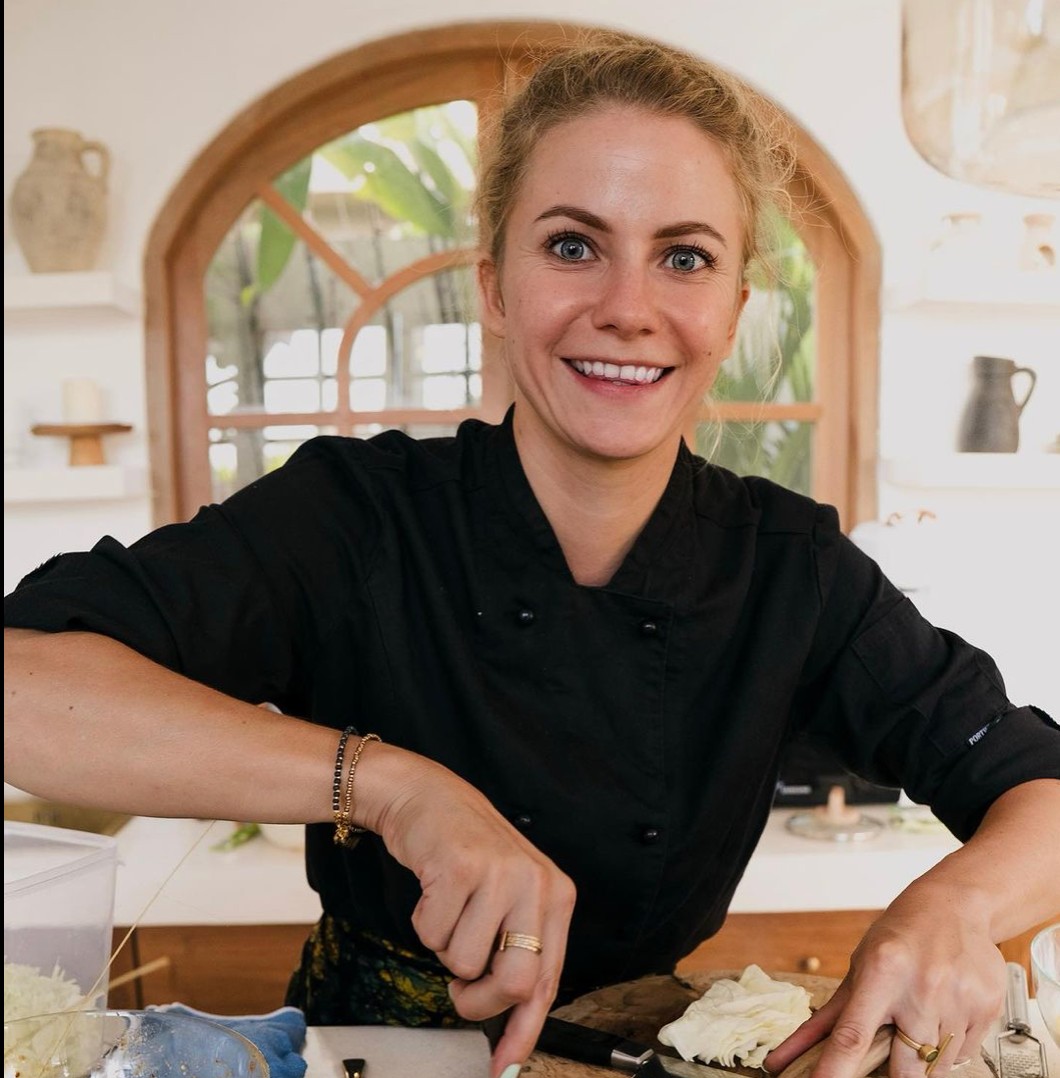
Cooking got its hooks into me before I understood what a real kitchen even was — cookbooks, kitchen shows, and a kid in Poland figuring it out at the counter because nobody was going to tell her not to. In my early twenties I made it a career instead of a habit, and it took me further than I expected.
I cut my teeth on the line in Copenhagen — nights that ran too long, hands that never quite stopped smelling like garlic — then years climbing to Head Chef back in Poland. Somewhere in there I landed in the pastry and molecular section of a Michelin-starred kitchen in Warsaw, the kind of place that either breaks you or teaches you precision you can't unlearn. It taught me. After that came sous chef work in five-star hotels, and then the thing I turned out to actually be built for: walking into an empty kitchen and building the whole operation from nothing, menu, hires, training, the works, then sticking around long enough to find out if any of it survives contact with a real service.
That's the skill that got me on a plane to Zanzibar, running food and beverage for seventeen boutique hotels at once, a few hundred cooks on the payroll, events that fed 700 people in a single night, standards I wrote myself because nobody else was going to. It was the highest point of my career on paper. It also cost more than it paid: I'd built a life around corporations and spreadsheets and had almost nothing left over for people, or for myself.
“So I made the call most people in this industry are too scared to make, and walked away from the ladder at the top of it.”
For three years I traveled instead of managed, through Vietnam, China, Kazakhstan, Mongolia, Uzbekistan, Sri Lanka, India, Indonesia, Malaysia, Thailand and more, with stops back in Europe along the way. No hotel group, no title, just markets, home kitchens, and whoever was willing to show me how they actually cooked. That's where I found what I'd been missing without noticing I'd lost it: ingredients that mean something, roots, and the kind of connection you only get from cooking directly for a person instead of a P&L. I'm Polish by blood and by heart, and it shows: I don't trust anything that wasn't made by hand, whether that's a wheel of cheese, a menu, or a dinner for two. Somewhere in those three years I also rebuilt my own health from the ground up, which is what pulled me into nutrition and training as seriously as I'd ever taken a kitchen, not as a side interest, but as the other half of feeding someone properly.
These days that's the whole job: private dinners, hosting, small retreats, and helping other people open restaurants and hotels the right way, but on my own terms this time, working for myself, from Koh Samui outward. Everything I learned running those kitchens is still in my hands. I just stopped spending it on spreadsheets and started spending it on people, feeding the body and the soul, one table at a time.